
Digestive Support Tea: Not All “After-Dinner” Blends Do the Same Work
By Herbsemble Marketing October 28, 2026
Walk into any tea shop or scroll through any herbal tea brand, and you’ll find a version of the same promise: a cup for after the meal. Something to settle the stomach. Something to take the edge off feeling too full.
The category is real. Post-meal digestive aid products are one of the named growth trends in the digestive tea market right now . But here’s what the shelf doesn’t tell you: not every blend positioned for “digestion” is doing the same job. The difference is all about ingredients.
The Herbs That Actually Do Digestive Work
If you look at what the research and traditional use actually point to, a few herbs show up again and again for digestive comfort, including western and eastern cultures.
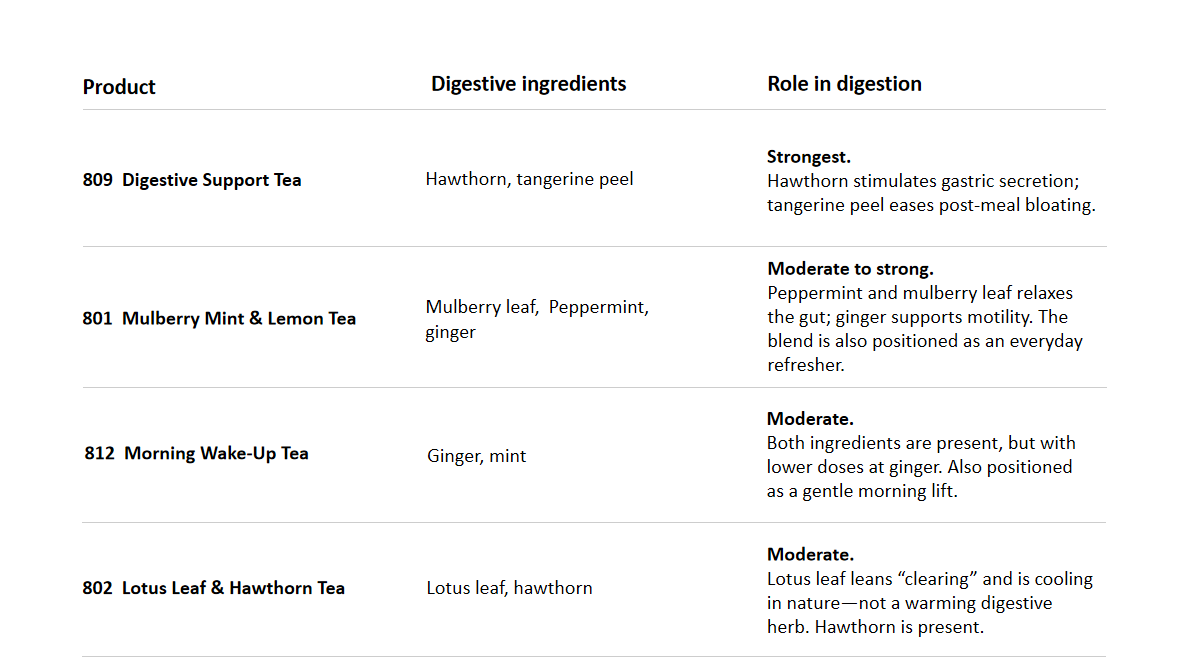
Peppermint is the most directed raw material. It helps relax the smooth muscle of the gut, which is why it’s traditionally used for cramping, gas, and that tight, bloated feeling.
Ginger works differently. It stimulates digestive secretions and motility—it gets things inside of gut moving rather than just relaxing. It’s also one of the fastest-growing single herbal tea categories right now, such as the common Lemon Ginger Tea in the shelf, partly cause consumers already associate it with digestive and nausea relief.
Hawthorn is another one with a clear mechanism. It’s tart, and the acidity stimulates gastric secretion. In traditional Chinese practice, it’s the ingredient you reach for when a meal sits heavy—especially after meat or rich food.
Aged tangerine peel is used in traditional Chinese practice to ease the bloated, stuck feeling that comes after eating too much or too fast. It’s aromatic and slightly bitter, and it works on a different axis from mint or ginger: it doesn’t relax the gut or speed it up, it moves the stuck feeling along.
Lemon balm is similar. Research notes its soothing and anxiolytic effects, and it can be beneficial for bloating when stress is a contributor . That’s a real benefit. But it’s not the same as a direct digestive action.
These five are the heavy lifters. If a herbal tea blend is positioned for after-dinner comfort and it leads with peppermint, ginger, or fennel—or some combination of them—the formula is doing the work the label implies.
What Else Fits: Digestive Herbs That Stay Within Food Regulations
Two ingredients that often get pulled into digestive blends are lotus leaf and mulberry leaf. They’re worth separating from the core five.
Lotus leaf does have digestive relevance—it’s traditionally used to support digestion and promote bowel movement, and some sources note that it can stimulate digestive fluid secretion and gut motility. It’s not being used alone as a warming digestive tea, so we craft it with other materials in our blend.
Mulberry leaf is even more indirect. Some research points to its role in supporting gut microbiota, but that’s a different mechanism from “easing bloating” or “moving digestion along.” It belongs in a blend for other reasons—flavor, tradition, or general wellness—not as the digestive engine. What’s more, the tender leaves are hand-picked for a delicate, creamy aroma—and they carry a stronger gut microbiota-supporting profile than the older leaves.
What This Means for Small Brands Building a Digestive Tea Line
The good news is that you don’t need to become an herbalist to get this right. You just need to ask one question about any formula you’re considering: Which ingredient is doing the digestive work?
If the answer is “the mint” or “the ginger” or “the hawthorn” or “the tangerine peel,” the product has a real foundation. If the answer is “the chamomile, because it’s calming,” that’s a different product—and it should be positioned differently, probably around evening relaxation or stress support, not digestion.
For a café or a small retail line, this is actually an opportunity. Most shelf brands blur the line between “calming” and “digestive” because it lets them use the same chamomile-heavy base for multiple SKUs. A small brand can do the opposite: build a formula that leads with the herbs that actually do the job, and describe it honestly.
A good digestive support tea doesn’t list ten botanicals and hope one of them works. It leads with the herbs that do the work, and lets the rest support them.