
Autumn & Winter Herbal Blends: The Ingredients That Matter, and How to Choose
By Herbsemble Marketing October 28, 2026
Autumn and winter change what people want from a cup of tea. Summer is about refreshment—light, cooling, easy to drink. When the weather turns, the priority shifts to warmth, body, and something that holds up to heavier food and colder air.
Most brands don’t rebuild their tea for certain season. They change the packaging, or they add cinnamon to an existing blend and call it a fall edition. The ingredients stay the same.
So before talking about which blends fit autumn and winter, it’s worth looking at what one ingredient actually does when weather turns cold—why it matters, and how it’s used.
Two More Ingredients That Matter in Autumn and Winter
Ginger
In Chinese medicine, ginger is used to warm the middle and dispel cold. It’s the herb you reach for when the body feels cold from the inside. In Western cooking, ginger is used mainly as a baking spice.
Lemon ginger tea is so common and easy to find. It’s a classic pairing that works because ginger’s warmth is direct and immediate, and lemon cuts through it without competing.
These colors aren’t just for show. They reflect the presence of different phytonutrients, naturally occurring compounds in plants that offer a wide array of health benefits, from fighting inflammation to boosting brain function.
But there’s a balance problem. Too much ginger, and the tea burns the throat. Too little, and you lose the benefit.
A Gentle Kick: Morning Wake-Up Tea
Blend: Ginger + mint + lemongrass + licorice root + pear
Our Morning Wake-Up Tea is designed for the mornings when you want to wake up without being jolted awake. For the days when the air is cool but not cold yet.
How it tasted The first sip is about clean and cooling from mint and lemongrass. Then, as you swallow, the ginger shows up: a slight tingle in the throat, much milder than a standard lemon ginger tea, and it disappears almost immediately. The clean and herbal freshness stay in your mouth and makes you want a next sip.
When the Weather Gets Colder: Immune Support Tea
Blend: Ginger + lemongrass + roasted barley + licorice root + spearmint
This is the cup designed for the cold season. It’s an ideal choice for you to warm up and stay focused. People need more ginger in cold weather. The warmth has to be stronger, and the cup has to feel more substantial. Our Immune Support Tea is the next step up.
How it tasted The first sip is fairly mild. Then the lemongrass comes through with a soft citrus note, and the licorice root leaves a gentle sweetness as you swallow. The ginger shows up at last: a heat hits the throat that fades quickly.
It’s more noticeable than the Morning Wake-Up Tea, but it still doesn’t burn. It just lets you know it’s there.
Roasted Barley
Roasted barley is used to aid digestion and move stagnation traditionally. It’s the ingredient you reach for when a meal sits heavy and the stomach feels stuck. Roasted barley is almost always paired with something that softens its slight bitterness.
Crafted with Hawthorn and Lotus Leaf: Digestive Support Tea
Blend: Roasted Barley, Hawthorn Berry, Tangerine Peel, Mint, Roasted Carob, Stevia Leaf, Pear
How it tasted The first sip is warm and slightly sweet from the roasted grains come through in the middle, toasty and grounding. The hawthorn shows up at the end, a gentle tartness that makes your mouth water. The pear is what holds it together—two grams per bag gives it enough sweetness to feel soothing without being cloying.
Crafted with Chicory Root and Cinnamon: Coffee Alternative Tea
Blend: Roasted Chicory Root, Roasted Dandelion Root, Roasted Barley, Roasted Carob Powder, Cinnamon, Monk Fruit, Pear
This is a cup designed for morning, a smooth and roasted blend that delivers the depth and richness of coffee without caffeine.
How it tasted The first sip is roasted and slightly bitter, the way coffee opens. Then the cinnamon and monk fruit bring natural sweetness that softens the bitterness. Roasted barley stays underneath, giving it a malty depth. The body is thick enough to feel like a real cup of coffee.
More Blending Ideals for Autumn and Winter Herbs
Ours target is to craft series of herbal tea blends, matching different seasons and drinking occasions, using as few ingredients as possible to cover more of the menu based on what each ingredient actually does.
Pear is traditionally eaten in autumn and winter to moisten the lungs and ease dryness. Dried pear works the same way in tea blends—it gives the cup a soft, round sweetness that feels soothing in dry weather. Several of our blends use it for exactly this reason.
We can also change the ratio instead of the ingredient list.
Cinnamon is a good example of this. For a long time, we didn’t like it—the flavor was too strong, too medicinal. But the number of cinnamon-based herbal teas on the market attract our attention. We’re now working on cinnamon-forward blends, not because cinnamon is popular, but because the market keeps telling us it belongs in autumn and winter.
Roasted carob powder is another ingredient we’re using more of. It brings a natural, cocoa-like sweetness to a blend—no caffeine, no added sugar. It’s what gives a cup a warm, roasted finish and balances the tartness of hawthorn in our Digestive Support Tea and Coffee Alternative Tea.
How to Choose
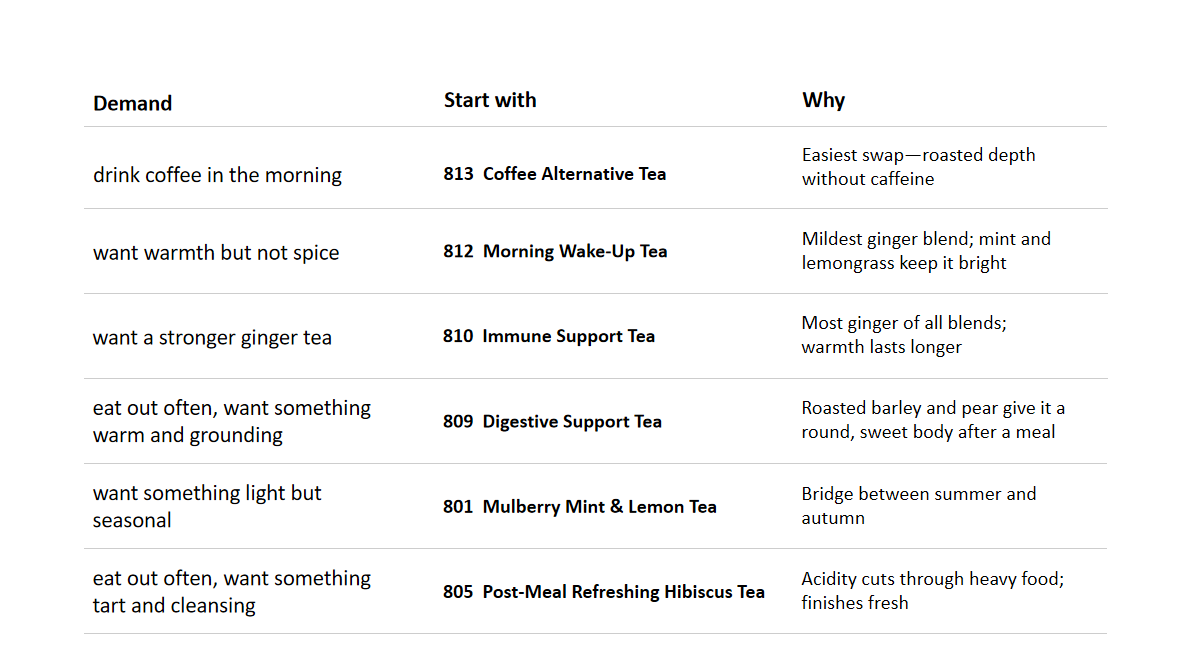
Click this picture and zoom.